
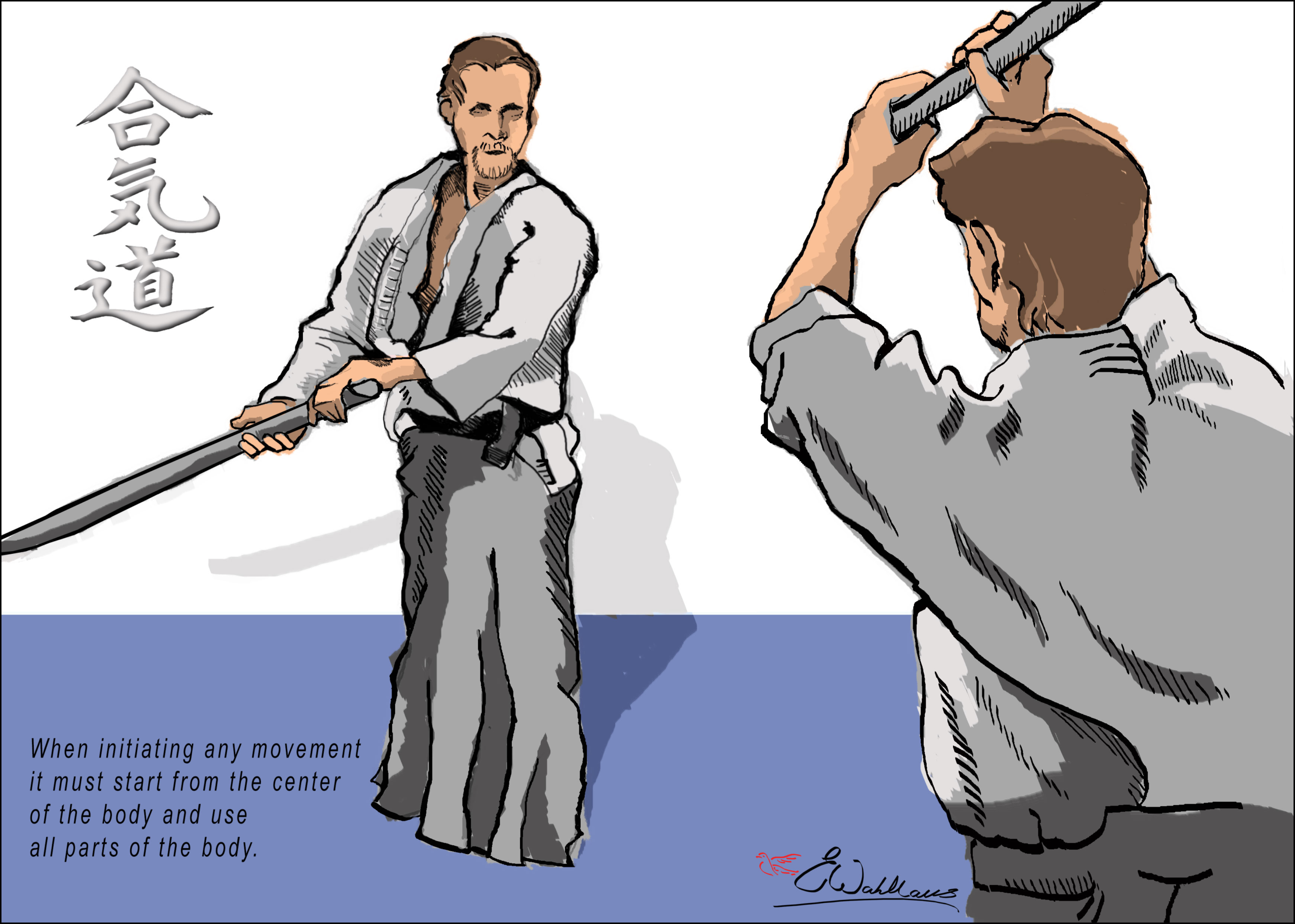
If you look at most teaching manuals they are essentially Nage centric in their approach to teaching Aikido, perhaps in the beginning of the manual there will be a brief description of how to fall, how to do a forward roll, backward roll, knee walking and so on. However the focus of most manuals are the movements of Nage with little explanation about Uke. To better understand Aiki a better grasp of Ukemi is required. Ukemi in this context refers to the movements of uke not only how they preform the attacks but equally how they respond to nage’s defensive techniques.
In a presentation by Henry Kono, he stresses the role of uke (the person receiving the technique) is not that of a passive victim, but of an active participant essential to the discovery of balance. Kono emphasizes that “there is no victim in Aikido”; rather, the uke and nage (the defender) function as two halves of a single, unified whole striving always to be in balance.
 The Foundational Lesson of Ukeme
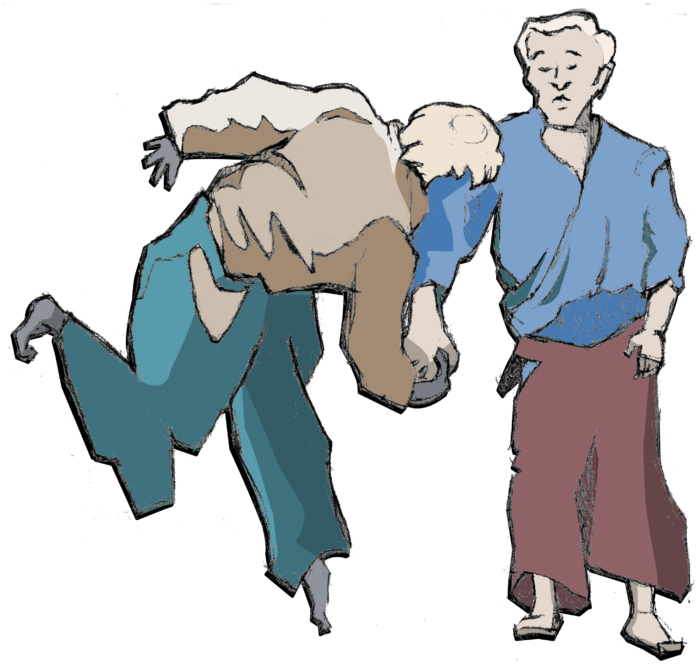
Practicing ukemi, falling and receiving of nage’s techniques should be treated as a prerequisite before focusing on the techniques like throwing. This extended period as an uke is critical for several reasons:
Body Awareness: Taking ukemi (falling) creates a deep awareness of the body that cannot be achieved by focusing solely on throwing.
Instinctive Movement: After years of following, uke begins to understand how to move automatically. Eventually, uke doesn’t need to be “taught” techniques because they have learned the underlying principles of movement through their own body.
Safety: By learning to drop their center, stay grounded, and stay loose, uke learns how to get their body out of the way of an attack—such as a sword—to avoid injury.
Following and “Lightness”
The goal of uke is to follow the nage exactly without resistance. Kono explains that resistance or “dragging” makes an uke feel heavy and creates conflict.
Becoming Light: An uke becomes “light” by following the defender’s movement so closely that it is difficult to distinguish who is actually performing the technique.
Timing: Uke aims to move at the exact same time as nage, leaving no space or delay between their actions.
The Opposite Nature: Balance between uke and nage requires uke to be doing the “very opposite” of what the *nage* is doing, thus ensuring the two remain in harmony.
The “Stop Point” and Intent
Kono introduces the concept of the “stop point” to explain the interaction between uke and nage, the contact point between nage and uke that neither can pass.
Non-Interference: uke must not push into or invade the space of the nage.
Continuous Intent: While uke must not push past the point of contact, they must keep their energy “coming out” or going forward. If the uke stops their intent or pulls back, they become “heavy” and lose the connection.
Spontaneous Turning: When uke maintains this forward intent but respects the “stop point” where they touch nage, their body will naturally and automatically begin to turn, leading to the throw without the need for brute force.
Technical Integrity
A good uke must also be honest in their attack to help the nage learn. If uke just “stands there” or holds with the intent to stop the other person, they are not practicing Aikido principles. A honest attack is characterized by:
Dropping the Center: Instead of leading with the shoulders, which creates stiffness, uke must practice bringing their center / awareness down to stay mobile and responsive.
Keeping the Center Between the Hands: Just like nage, uke should keep their hands aligned with their own center to maintain good posture.
Ultimately, Kono argues that if the uke does not improve and understand these principles, then as nage they will never truly comprehend the art, as the two are inextricably linked.